Why Modular Furniture Is Changing the Way We Live in 2026
Modular furniture is a system of individual, interchangeable pieces that connect together to form sofas, shelving, storage units, and more — all designed to be rearranged, expanded, or reconfigured as your needs change.
Quick answer — what you need to know:
- What it is: Separate units (seats, corners, ottomans, shelves) that clip or lock together into a larger piece
- Who it’s for: Apartment dwellers, renters, growing families, remote workers, and anyone who moves often
- Key benefit: One investment that adapts to different rooms, layouts, and life stages
- Popular types: Sectional sofas, modular shelving, wall beds, media units, and storage systems
- Price range: Quality systems typically range from ~$749 to $3,900+ depending on the configuration
- Eco factor: Many systems use recycled materials, FSC-certified wood, and low-VOC finishes
The modern home is expected to do more than ever. A spare room might be a home office by day and a guest room by night. A studio apartment has to function as a living room, workspace, and bedroom — all at once.
Traditional furniture wasn’t built for this. It’s fixed, heavy, and hard to move. When your life changes — a new apartment, a growing family, a new roommate — your old sofa usually can’t come with you in any meaningful way.
That’s exactly why modular furniture is having a moment right now.
According to a NielsenIQ report, 78% of global consumers say a sustainable lifestyle is important to them, and 76% are willing to pay more for eco-friendly furniture. Modular design speaks directly to both values — buy less, keep it longer, and adapt it instead of replacing it.
Whether you’re furnishing a 500-square-foot apartment or a sprawling open-plan living room, this guide covers everything you need to choose, assemble, maintain, and expand a modular furniture system that actually works for your life.
What is Modular Furniture and Popular Customizable Systems
At its core, modular furniture is a design philosophy centered on interchangeable components. Instead of a single, static object, you have a collection of “modules” that can be customized, rearranged, and adapted to suit a variety of floor plans. Think of it as the adult version of LEGOs — you start with a base and build exactly what you need.
In April 2026, we are seeing a massive shift in how people view their living spaces. The traditional nuclear family model is no longer the standard for the majority of U.S. households, yet many homes are still built with that old blueprint in mind. This is where modularity steps in. It bridges the gap between static architecture and dynamic living.
This trend is also closely tied to the rise of factory-built housing. Currently, factory-built housing accounts for approximately 11% of new single-family home construction in the U.S. These homes often feature open floor plans and clean lines, making them the perfect canvas for modular furniture systems that can be adjusted as the household evolves.
The Core Differences Between Traditional and Modular Furniture
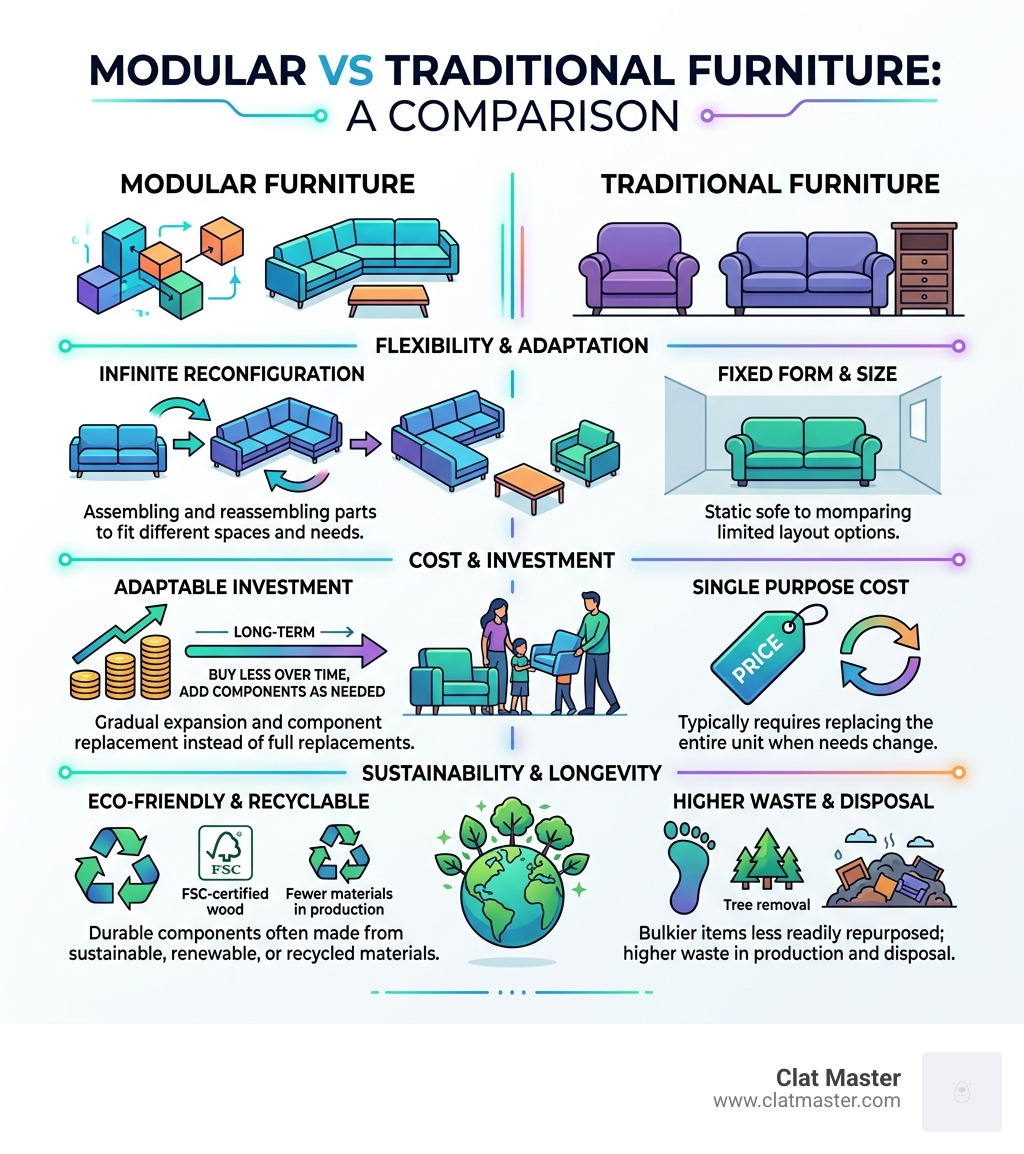
The main difference lies in the construction and the “intent” of the piece. Traditional furniture is static. A standard three-seater sofa will always be a three-seater sofa. If you move to a house with a larger living room, that sofa might look tiny; if you downsize, it might not fit through the door.
Modular furniture, on the other hand, is dynamic.
- Fixed vs. Flexible: Traditional sectionals often have a fixed “L” or “U” shape. Modular sectionals are made of individual armless seats, corners, and ottomans that can be swapped from left-facing to right-facing in minutes.
- Moving Day: Traditional furniture is the enemy of narrow hallways and fifth-floor walk-ups. Modular pieces arrive in smaller, manageable boxes, making them a dream for apartment living.
- Shipping Efficiency: Because they break down into uniform units, modular brands can often ship via standard ground services rather than expensive, slow freight.
Benefits of Modular Furniture for Modern Living
We believe that the best furniture is the kind that grows with you. Here are the primary benefits we’ve identified:
- Infinite Customization: You can build a loveseat today and turn it into a 10-piece pit sectional next year.
- Longevity: Because you can replace individual covers or modules, the furniture lasts longer. If a puppy chews one corner of a traditional sofa, the whole thing is ruined. With modularity, you just replace that one part.
- Multi-functional Rooms: Versatile modular systems allow you to build desks, room dividers, and even bed frames that can be dismantled and turned into something else entirely when you move.
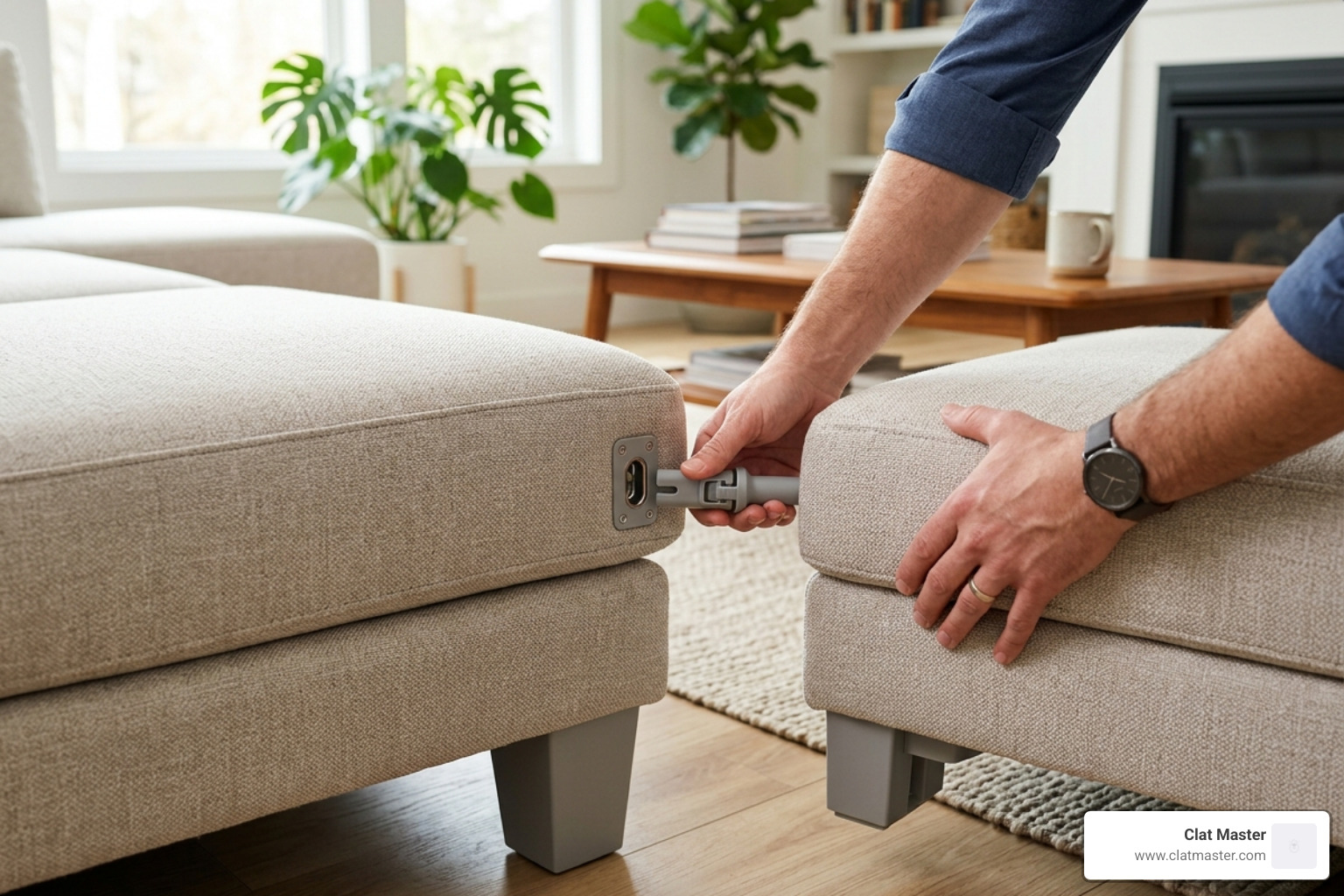
- Tool-Free Innovation: Many modern systems use patented J-brackets, C-clips, or simple hand-tightened clamps. This means you don’t need a toolbox or a degree in engineering to set up your living room.
Popular Seating and Sectional Configurations
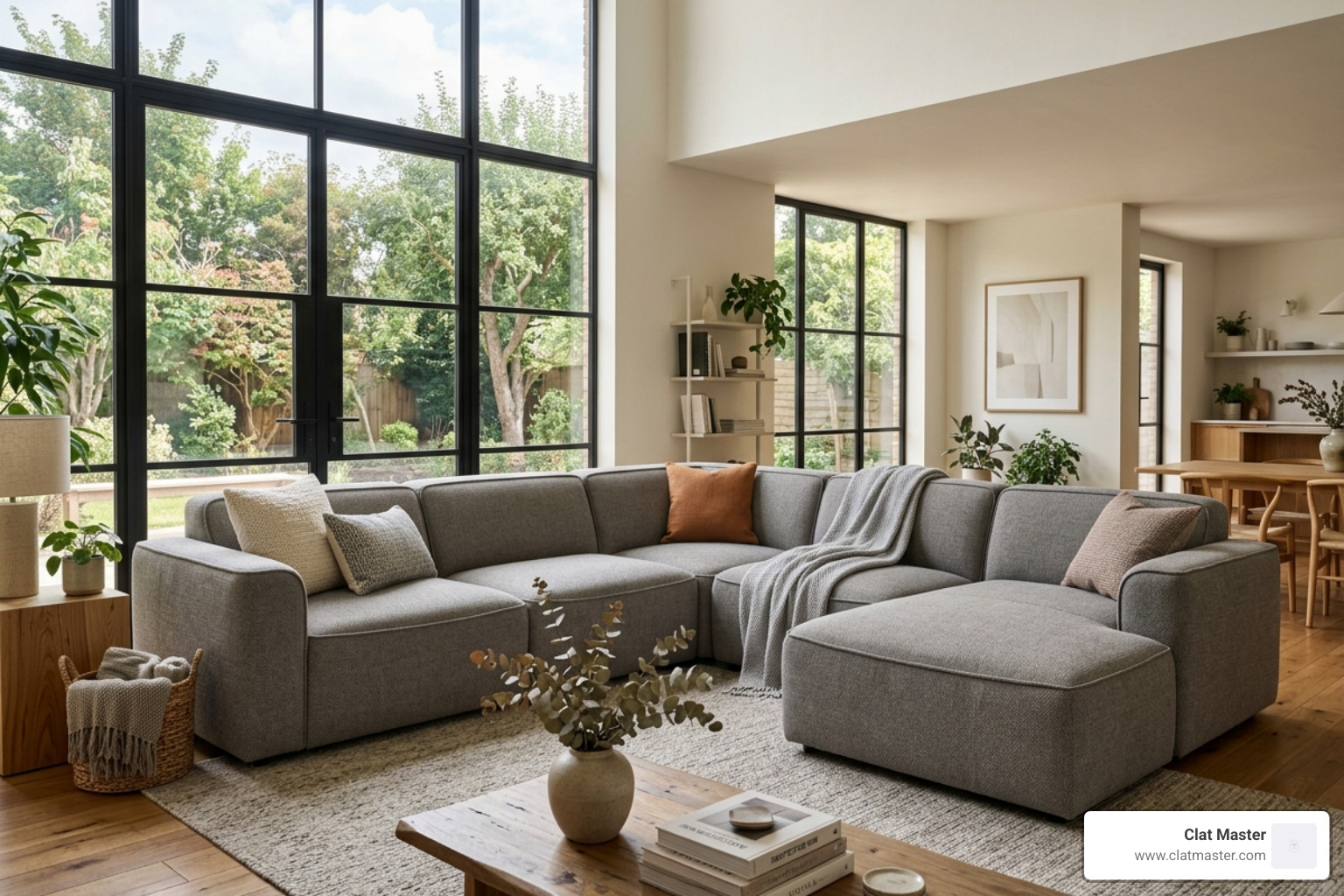
When shopping for modular furniture, you’ll encounter several standard “blocks.” Understanding these helps you plan your layout:
- Armless Seat: The “filler” piece that extends the length of a sofa.
- Corner Unit: The anchor that allows the sofa to turn 90 degrees.
- Ottoman: Can be used as a footrest, a coffee table, or an extra seat.
- Chaise: A module designed for lounging with extra legroom.
| Configuration | Best For | Typical Modules Needed |
|---|---|---|
| L-Shape | Corners and small rooms | 1 Corner, 2-3 Seats, 1 Ottoman |
| U-Shape | Large families, entertaining | 2 Corners, 4-6 Seats, 2 Chaises |
| The Pit | Movie nights, ultimate comfort | 4 Corners, 2-4 Seats, 2 Ottomans in center |
Choosing Materials, Sustainability, and Tech Integrations
Choosing the right modular furniture isn’t just about the shape; it’s about what’s inside. In 2026, the industry has moved toward “performance” everything. We recommend looking for kiln-dried hardwood or metal frames for the “bones” of your furniture to ensure it doesn’t warp over time.
For the surface, “performance fabrics” are the gold standard. These are tightly woven textiles designed to be stain-resistant, moisture-wicking, and incredibly durable. If you have kids or pets, these aren’t just a luxury – they are a necessity.
Sustainability and Eco-Friendly Modular Furniture
Sustainability is no longer a niche requirement; it’s a primary driver for modern consumers. We’ve seen incredible strides in how modular furniture is manufactured:
- Recycled Materials: Some leading brands have saved over 100 million plastic bottles by transforming them into recycled upholstery fabric.
- Reclaimed Foam: Over 20 million pounds of foam are recycled yearly by some manufacturers using reclaimed remnants to create plush, supportive cushions.
- Certifications to Watch For: Look for FSC-certified wood (Forest Stewardship Council) to ensure responsible forestry. To protect your indoor air quality, seek out CARB2 and TSCA Title VI certifications, which ensure low formaldehyde emissions.
Smart Features and Media Storage
The latest modular furniture systems do more than just provide a place to sit. They are becoming tech hubs.
- Integrated Power: Many modular sofas now feature hidden USB-C ports and wireless charging pads built directly into the “sides” or armrests.
- Immersive Audio: Some high-end systems integrate surround sound speakers directly into the frame, hidden beneath the fabric for a “stealth” home theater experience.
- Modular Media Consoles: Advanced media consoles allow you to customize shelving and storage to fit your specific tech setup, featuring airflow tubes to keep your gaming consoles or receivers from overheating.
Practical Tips for Assembly, Maintenance, and Small Spaces
One of the biggest draws of modular furniture is the “no-tool” promise. Many leading systems utilize patented J-brackets and C-clips that allow you to slide and lock pieces together in minutes.
For those living in small apartments or Accessory Dwelling Units (ADUs), modularity is a game-changer. You can navigate narrow hallways and tight elevators with ease because the furniture stays in its individual boxes until it’s inside the room.
The 30-36 Inch Rule: When arranging your modular setup, always ensure you leave 30 to 36 inches of “walkway clearance” around the furniture. This prevents the room from feeling cramped and ensures a natural flow of traffic.
How to Reconfigure and Expand Your Setup
The beauty of a modular system is that it’s “forward compatible.” This means if a brand releases a new reclining module or a storage seat three years from now, it should fit perfectly with the pieces you bought today.
When expanding:
- Check Room Clearance: Measure twice. A “Pit” configuration looks great in photos but can swallow a small room whole.
- Add in Stages: You don’t have to buy the 8-piece set upfront. Start with a loveseat and add an armless seat every few months as your budget allows.
- Rotate for Depth: Some systems allow you to rotate a standard seat 90 degrees to create a “Deep Seat” configuration, giving you more legroom without needing to buy new parts.
Cleaning and Long-Term Maintenance
To keep your modular furniture looking new in 2026 and beyond, follow these maintenance hacks:
- Machine-Washable Covers: Most modern modular brands offer removable covers. Wash them in cold water and line dry only. Putting them in the dryer can shrink the fabric, making it impossible to get back onto the frame.
- Vacuum the Seams: Because modular pieces have more “joins” than traditional sofas, crumbs and pet hair love to hide in the cracks. Use a crevice tool once a week.
- Rotate and Fluff: To prevent “butt prints,” rotate your cushions every few weeks. Since modular seats are often uniform, you can swap the cushions between the high-traffic middle seat and the low-traffic end seats.
- Tighten Connectors: Every six months, do a “connection check.” Ensure your clamps or clips haven’t loosened with use.
Frequently Asked Questions
Are modular sofas as comfortable as traditional ones?
Absolutely. In the past, modular pieces were sometimes criticized for feeling “stiff” at the joints. However, modern engineering has solved this. Look for high-resilience foam or foam-and-fiber wraps. Many systems now use suspension components like reinforced steel springs or high-density webbing that provide the same (or better) ergonomic support as high-end traditional sofas.
How do I keep modular pieces from sliding apart?
This is the most common concern. Quality modular furniture uses heavy-duty interlocking hardware — usually steel clamps or “shoes” that the feet sit in. To further prevent sliding, especially on hardwood floors, place your sectional on a large area rug or use non-slip rubber pads under the feet.
Is modular furniture worth the investment for small apartments?
Yes, arguably more so than for large homes. The ability to maneuver separate modules through tight spaces is invaluable. Furthermore, if you move from a studio to a two-bedroom, your furniture can expand with you, saving you from having to sell your “apartment-sized” sofa and buy a new one.
Conclusion
The shift toward modular furniture represents a broader move toward smart, sustainable, and adaptable living. By choosing pieces that can evolve, you aren’t just buying a sofa or a shelf — you’re investing in a system that respects your changing lifestyle, your space, and the planet.
Whether you’re looking for a kid-friendly sectional made from recycled bottles or a high-tech media center for your home office, the modular market in 2026 has a solution. We encourage you to start small, prioritize high-quality materials, and enjoy the freedom of a home that can change as quickly as you do.
For more DIY furniture ideas, space optimization hacks, and in-depth reviews of the latest smart living solutions, explore our latest guides at Clat Master. We are here to help you combine eco-conscious choices with the ultimate in home flexibility.